HVAC Mold Cleaning in Reno, NV
The first cold night in October you turned the furnace on and the whole house smelled like a wet basement for twenty minutes. It faded, then came back the next morning. Or it is July, the swamp cooler is running, and the hallway under it has smelled damp for a month. Either way the system is moving air across something wet. This site connects you by phone with an independent local provider who does HVAC mold cleaning in Reno and across Washoe County.
What the crew does first
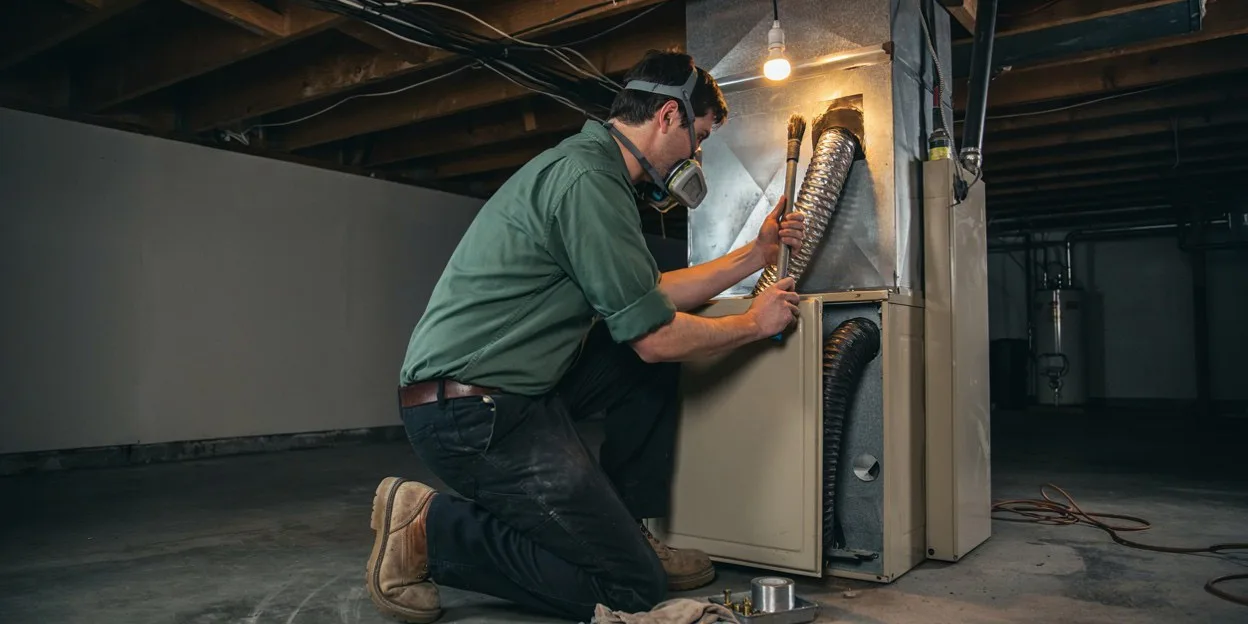
The crew opens the system and looks. For a furnace with central air, that means the blower cabinet, the evaporator coil, the drain pan, and the first few feet of supply duct. For a swamp cooler, it means the pads, the pan, the float, and the ceiling or wall the cooler sits on. They read the surrounding drywall and insulation with a moisture meter, because a cooler that has dripped for a summer has usually wet the attic or the wall around it.
Then they follow the ducts. In an older Reno home the ducts often run through the crawl space, and a loose joint down there pulls crawl space air into the system. In a newer home they run through the attic, under a swamp cooler that may have leaked. The smell is a symptom. The wet spot is the job.
What to do in the next hour
Turn the system off if you can stand the temperature. Every cycle is pushing more air across the growth. If it is a swamp cooler, shut the water supply to it. If it is the air conditioner, check the condensate drain line for a clog, because a backed-up pan is the usual source in summer.
Do not spray anything into the registers. Note which rooms smell worst and whether the smell is stronger at startup or constant. That helps the crew decide whether it is the equipment or the ducts.
What is usually saved and what is removed
Metal parts are cleaned: the blower, the cabinet, the coil, the pan, and rigid metal duct. Flexible duct with growth inside it is usually replaced, because the inner liner cannot be cleaned well. Duct liner and any fiberglass board that has grown mold comes out. Swamp cooler pads are replaced. The cooler pan is cleaned or replaced if it has cracked.
The drywall and insulation around a leaking cooler or a sweating cabinet are handled like any other wet wall: what is porous and wet comes out under containment, what is solid is cleaned and dried. If that turns out to be a large area, mold removal covers what happens next. Fixing the source is part of the job: a new float, a cleared drain, a sealed duct joint, or a cooler that finally gets taken off the roof. If the smell lingers after everything is dry, mold odor removal deals with what is left.
Washoe County notes: swamp coolers, furnaces, and dry air
Reno is one of the places where evaporative coolers still make sense, and thousands of homes in Sparks, Sun Valley, and the older Reno neighborhoods have one on the roof or in a window. A cooler works by keeping pads wet and blowing air through them. When the float sticks or the pan cracks, that water goes into the attic. When the pads are left wet at shutdown in October, they grow mold and the first furnace cycle carries the smell through the house.
Central air is the summer source in the newer subdivisions. A condensate line that clogs backs the pan up, and the blower cabinet stays wet. Winter belongs to the furnace. The dry air means most furnaces here run humidifiers, and a humidifier pad or drain that has been neglected keeps the cabinet damp all season.
Nevada does not issue a separate mold license. HVAC contractors are licensed through the state contractors board, and replacing ductwork or equipment usually needs a mechanical permit from the city or from Washoe County.
Calling about HVAC mold cleaning
Have the address and say what kind of system the house has: furnace with central air, swamp cooler, or both. Say when the smell shows up and which rooms are worst. Call (775) 459-9573.