Mold Removal in Reno, NV
You pulled the washer out to fix a wobble and found the wall behind it soft, with a band of dark growth along the baseboard about the width of a doormat. The supply line has been sweating onto the drywall for who knows how long. Two questions now: how to get rid of it, and how far past the doormat-sized stain the wall has to be opened. This site connects you by phone with an independent local provider who does mold removal in Reno and across Washoe County.
Marking where the damp ends before the wall opens
Nothing gets cut until a moisture meter has traced the wet area and the crew has drawn a line on the drywall where the readings drop to dry. In a Reno house that line often runs farther than the stain, because the desert air dries the surface while the drywall behind stays wet. They also check the floor. If the house has a crawl space, water that ran down the wall is probably in the joists too.
Then they build containment. Plastic sheeting seals the doorway, and an air scrubber with a HEPA filter runs inside the zone. The scrubber is set up as negative air, pulling air from the room and pushing it outside so dust does not drift into the rest of the house. Supply and return registers in the room get covered so the furnace is not moving that air.
Shut the valve, close the door, put down the bleach
Do not tear out the drywall yourself. Pulling a moldy board with no containment sends dust through the house, and in a forced-air home the furnace carries it to every room. Close the door, keep pets and kids out, and switch the thermostat fan from on to auto.
Do not spray bleach on the wall. Bleach soaks into the face paper while the growth in the gypsum core goes untouched. Find the water instead. Shut the valve behind the washer, or the main if you cannot find it. Take photos of the growth and the source before anyone touches it.
Drywall and insulation out, framing cleaned and dried
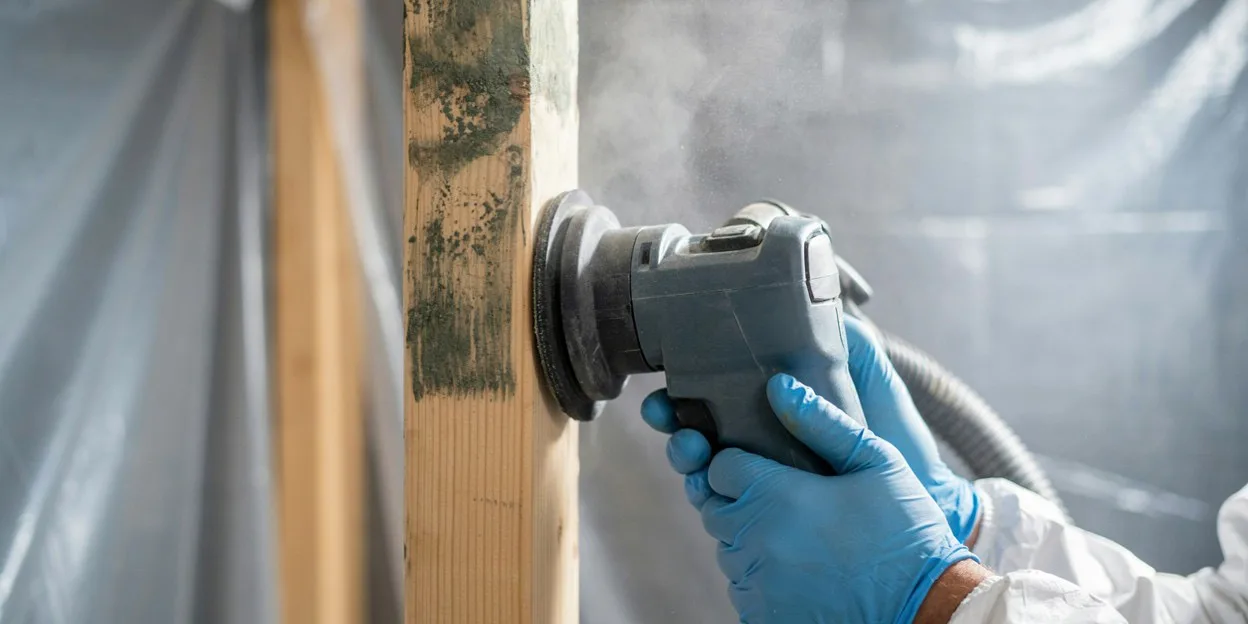
Porous materials that got wet and grew mold come out: drywall, baseboard, insulation, carpet pad, and the particleboard bottoms of some cabinets. Drywall is opened a fixed margin beyond the last visible growth, and every piece goes into a bag before it leaves the sealed area. Wood studs, subfloor, and joists are usually cleaned, sanded where needed, and dried in place. Tile, concrete, and metal are cleaned.
After removal, they HEPA vacuum and wipe every surface in the zone, then run drying equipment until the framing reads dry. Fixing the moisture source is part of the job, whether that takes a plumber, a roofer, or a swamp cooler tech. If the growth turns out to be under the floor, see crawl space mold remediation. If the wall is in a bathroom, bathroom mold removal covers the usual sources there.
Galvanized pipe, frozen lines, and ice dams in Reno walls
Most of the calls from Reno and Sparks trace to plumbing rather than weather. Supply lines behind washers and refrigerators, shower valves inside walls, and water heaters in garages and closets are the usual sources. In the older neighborhoods, galvanized pipe from the 1940s and 50s corrodes from the inside and pinholes without warning.
Winter adds two more. Pipes in exterior walls and crawl spaces freeze during a cold snap and split, and the leak shows up when they thaw. Ice dams push snowmelt under the shingles and down inside the wall. Both leave a wet wall that looks fine from the room until spring.
In Nevada, a mold crew does not hold a mold license, because the state does not offer one. The contractors who do removal and rebuild work are licensed through the state contractors board, and you can look one up before hiring. When drywall goes back in, the rebuild often calls for a permit from the City of Reno, the City of Sparks, or Washoe County for unincorporated addresses. The contractor who rebuilds should pull it. Many policies limit what they pay for mold, so ask your adjuster before the work starts and keep the crew's photos and readings.
When you call about the wall behind the washer
Know your address, roughly how large the patch is, and where the water came from if that is clear to you. Mention if the valve is shut, and tell the provider whether your Reno house sits on a crawl space or a slab. Call (775) 459-9573.